

Welcome to our 100% free technical analysis course. The goal here is to help you “see” the true state of the market by understanding price charts – so you can make more informed trading and investment choices.
Lesson 1: What is technical analysis? (video overview)
Watch the first video lesson to get a general understanding of technical analysis and how it can enhance your trading or investment strategy. Our course simplifies complex concepts and focuses on what matters. Instead of overwhelming you with every technical indicator, we highlight essential ones. You’ll avoid “analysis paralysis” – and see real results instead.

Our technical analysis course syllabus
We’re rolling out this course in stages right now, so keep watching this space! So far, you can access each free lesson through the links in the table below. Each lesson comes in written, video, and PDF formats to enhance the learning process.

What this technical analysis course covers (lesson previews)
Each lesson of this course builds on the one before it to cover a broad range of trading and technical analysis concepts. The course is split into four core sections: introducing technical analysis, understanding price charts, how to use trading indicators, and finally, how to use TradingView for charting, trading, and analysis. Each section is made up of a few lessons. You can read what each lesson entails below. Read or watch each lesson by clicking on the relevant title or cover image.

Lesson 1.1: What is technical analysis?
Learn the basics of technical analysis with our detailed beginner’s guide. Discover how to analyze price charts, recognize key patterns, and apply these skills to various markets like stocks, crypto, and commodities. This guide covers essential concepts and provides five real-world examples to help you understand how technical analysis can enhance your trading strategies, whether you’re in it for short-term gains or long-term investments.

Lesson 1.2: Wyckoff Method
The Wyckoff Method is a powerful trading strategy that focuses on market cycles and price behavior. This guide breaks down its key components, including the accumulation and distribution phases of big investors or “whales”, and shows how to identify them on charts. Learn how to apply Wyckoff’s theory as a basis for understanding technical analysis, with real-world examples to show how the Wyckoff Method works.
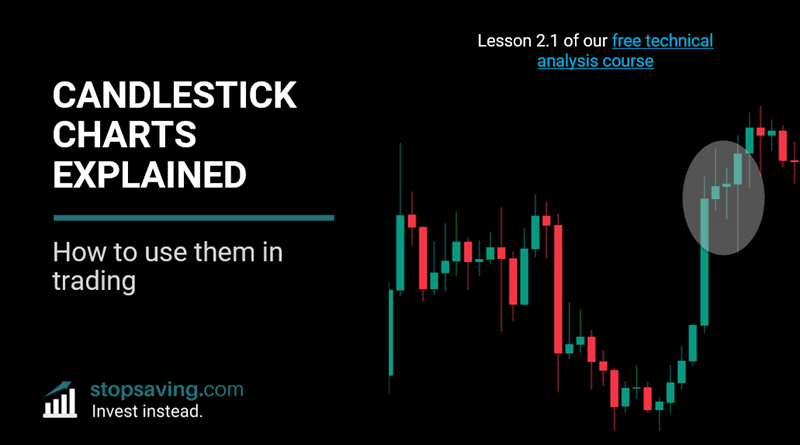
Lesson 2.1: Candlestick charts
This guide dives into candlestick charts, a key building block of this technical analysis course. Learn the differences between line and candlestick charts, understand the anatomy of price candles, and discover important patterns. You’ll explore bullish and bearish trend continuation candles, reversal candles like the Hammer and Hanging Man, and multi-candle formations like the Evening Star sequence.
Lesson 2.2: Trading time frames
Struggling to find the right trading time frame? This guide covers it all, from short-term to long-term trading. Learn the pros and cons of day trading, swing trading, range trading, and trend trading. Discover how to match your strategy with the ideal time frame to fit your goals and lifestyle. Whether you’re looking for daily gains or long-term growth, this guide will help you choose the best approach for your trading journey.

Lesson 2.3: Trendlines
Trendlines are a simple but effective tool for traders to track price momentum. In this lesson of the course, you’ll learn how to draw trendlines the right way on price charts, and how to trade trendline breaks and retests. You’ll see how trendlines can act as diagonal support and resistance for the price – because many traders watch them. This guide includes trendline examples with the Nasdaq, Bitcoin, and the US dollar index (DXY).
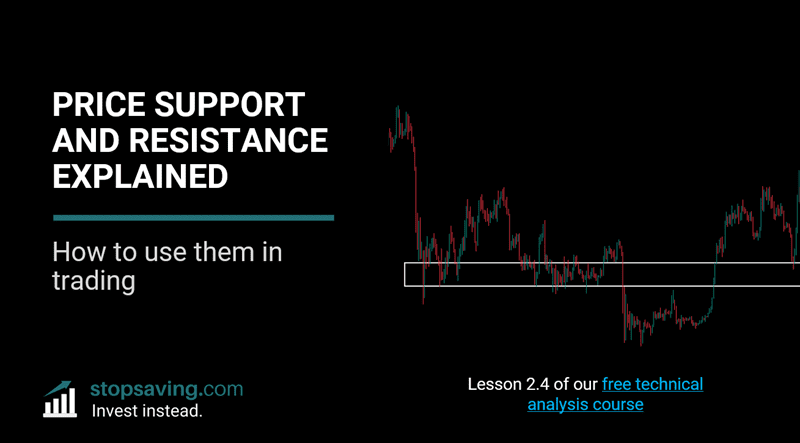
Lesson 2.4: Support and resistance
In this guide, we dive into price support and resistance levels, crucial tools for traders. You’ll learn to draw and identify these levels, handle support/resistance flips, and spot deviations. We explain both diagonal and horizontal support and resistance with real-world examples. This lesson also helps you understand how to use price support and resistance boxes to manage risk effectively.
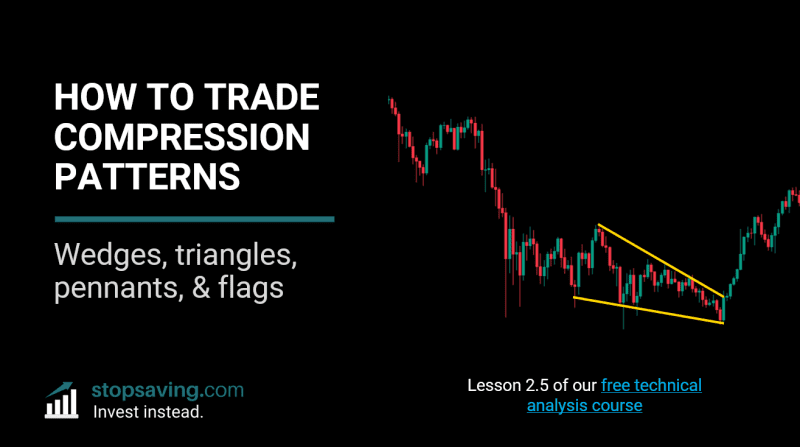
Lesson 2.5: Compression patterns
Compression patterns come in various forms like wedges, triangles, pennants, and flags. These show a slowdown of volatility and can often be “the calm before the storm,” leading to big, volatile price moves. In this lesson of our technical analysis course, you’ll learn how to trade these patterns as a range trader and a swing trader, with practical examples to guide you through each type.
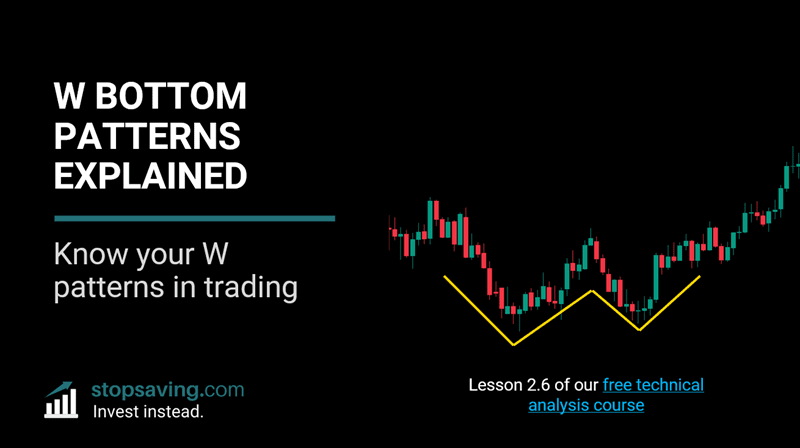
Lesson 2.6: Bottoming patterns
More often than not, prices tend to bottom with a W pattern or double bottom shape. These are far more common than V-bottoms in most cases. This lesson of our course explains how price bottoms can often take a while to form, and why patience is key when trading them.

Lesson 2.7: Topping patterns
Double top patterns, also known as M patterns, signal a potential trend reversal from uptrend to downtrend. This guide explains why double tops are common, how to spot them in various investments, and how to trade them effectively. You’ll learn about M patterns within different time frames and how head and shoulders patterns are related.
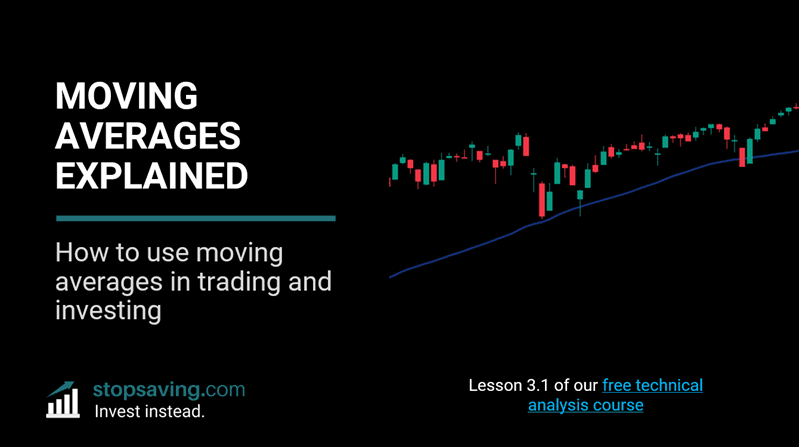
Lesson 3.1: Moving averages
Our indicators section kicks off with moving averages – straightforward yet powerful tools in trading and investing. This guide covers simple moving averages (SMA), exponential moving averages (EMA), and how to choose the right ones for your strategy. Learn about moving average crosses and their significance, and how to use moving averages to determine trend strength.
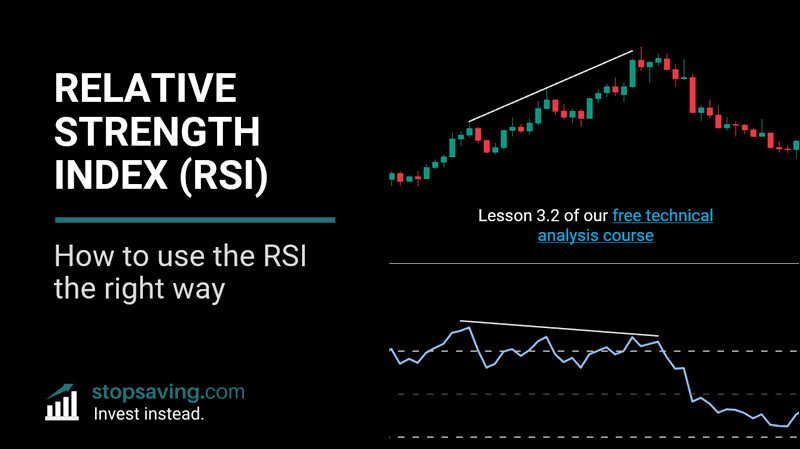
Lesson 3.2: Relative strength index
Learn to master the RSI (Relative Strength Index), a key momentum indicator for traders and investors. This guide covers everything from the basics of the RSI and how it’s calculated, to advanced concepts like trading bullish and bearish divergences and RSI trendlines. You’ll learn how to interpret the RSI the right way – i.e., in the context of an investment’s price action.
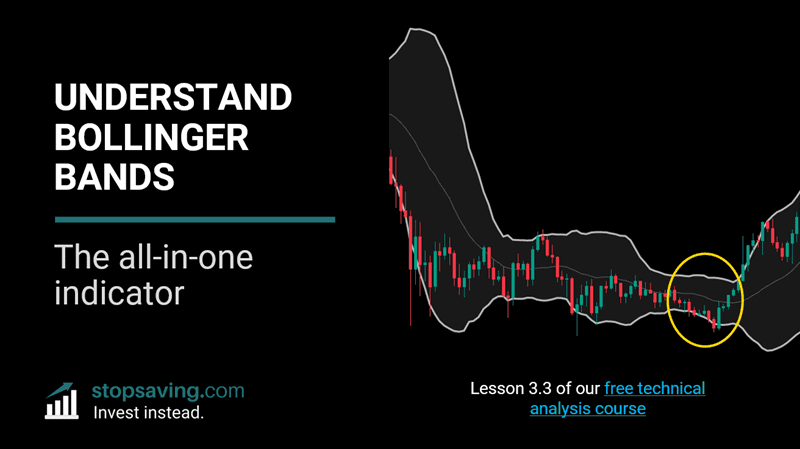
Lesson 3.3: Bollinger Bands
Bollinger Bands are an all-rounder indicator that helps traders analyze volatility, trend strength, and extreme price movements. This guide explains how Bollinger Bands are calculated and used, covering the significance of the middle, upper, and lower bands. You’ll learn how to apply Bollinger Bands to identify overbought or oversold conditions, understand the importance of Bollinger Band squeezes, and interpret trends with practical examples.
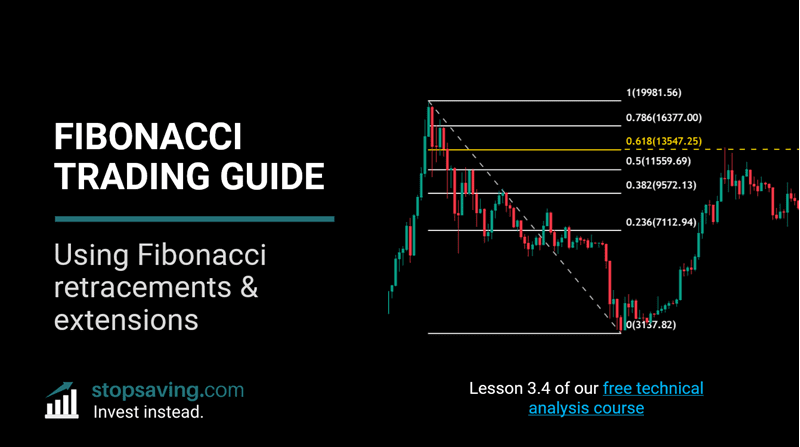
Lesson 3.4: Fibonacci trading
Learn how to use Fibonacci retracements and extensions to identify key price levels in trading. This guide explains the history of Fibonacci numbers, how to calculate the golden ratio, and how to apply these levels in your strategy. You’ll discover various Fibonacci retracement levels like the 0.618 and 0.382, and understand how to use Fibonacci extensions for forecasting price movements.
Lesson 4.1: TradingView overview
TradingView is a powerful charting tool for technical analysts, traders, and investors. This guide covers everything you need to know to get started, so you can put what you’ve learned in earlier sections of the technical analysis course to good use. Follow along with 32 detailed screenshots to master key functions like adding indicators and drawing trendlines.
Lesson 4.2: Personalizing TradingView
Learn how to personalize your TradingView charts to match your style. This guide covers setting the general style, adjusting symbol and status settings, customizing scales, and formatting canvas settings. You’ll also learn how to save your settings as templates, switch to log scale, and format tools like trendlines and indicators.

Meet your course instructor
Jonathan Hobbs holds the Chartered Financial Analyst ® designation and brings nearly two decades of financial market experience to this trading and technical analysis course. Jon once managed the investments for a boutique crypto and FX hedge fund, and is the author of three investment books. Before that, Jon worked at firms like Morgan Stanley, HSBC, and M&G Investments. Jon currently runs Stopsaving.com and is a senior writer and analyst for Finimize.
FAQs about this technical analysis course
| 1. | Q: What’s covered in this technical analysis course? |
| A: You’ll learn technical analysis basics, from reading price charts to using trading indicators, strategies, risk management, and the TradingView platform. | |
| 2. | Q: How’s the course content presented? |
| A: Each lesson comes in written and video format. | |
| 3. | Q: How long to finish the course? |
| A: There’s about 5 hours of video across 20 lessons. Completion time varies based on your pace. | |
| 4. | Q: Any prerequisites for the course? |
| A: No prior knowledge needed. Access to a trading platform like TradingView is helpful. | |
| 5. | Q: Who’s this course for? |
| A: Anyone interested in trading and investing, from beginners to those with some experience. | |
| 6. | Q: How’s this course unique? |
| A: It simplifies complex topics, focusing on essentials to prevent analysis paralysis. | |
| 7. | Q: Can I use mobile devices for the course? |
| A: Yes, it’s accessible on any internet-enabled device. |